
Emeralds always feel like the “rich kid” item in Minecraft. You’re mining deep underground, stacking iron and diamonds, thinking you’re doing well, then you see villagers casually trading emeralds like it’s pocket change. It hits differently. Suddenly, you want them too. But here’s the catch. Emeralds
Emeralds always feel like the “rich kid” item in Minecraft. You’re mining deep underground, stacking iron and diamonds, thinking you’re doing well, then you see villagers casually trading emeralds like it’s pocket change. It hits differently. Suddenly, you want them too.
But here’s the catch. Emeralds don’t behave like normal ores. They don’t just sit in huge underground veins waiting to be found. They are rare, biome-dependent, and tied to specific terrain rules that confuse a lot of beginners.
And yet, once you understand how Minecraft actually generates them, emeralds become way more predictable than they first seem.
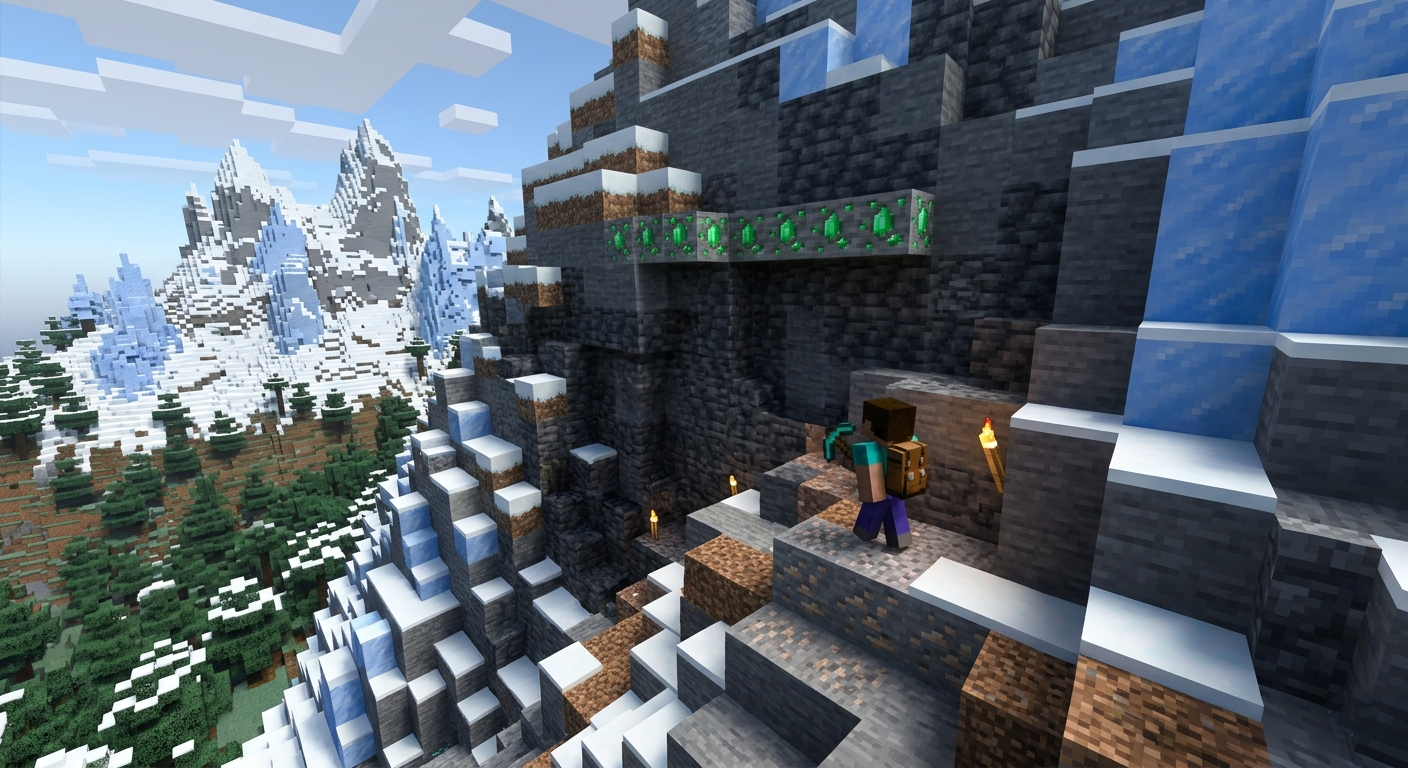
Emerald ore is one of the few ores in Minecraft that does not generate everywhere. It is strictly tied to specific biomes, mainly mountainous regions.
You will not find it in flat terrain. You will not find it in deserts or oceans. It simply refuses to spawn there.
Instead, emerald ore generates inside mountain biomes like:
These areas are key.
If you are not in a mountain biome, you are not in emerald territory.
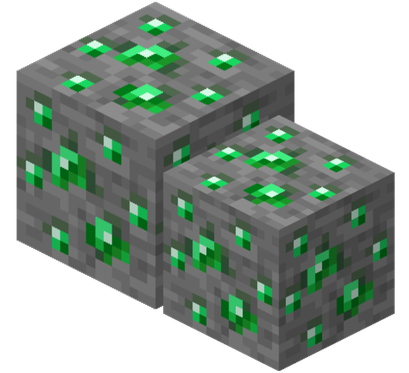
Emerald ore follows a very unusual generation system compared to other ores.
Instead of forming large clusters like iron or coal, it spawns as single blocks. One block at a time.
That makes it feel rare.
It also means you must search carefully through stone layers rather than expecting obvious veins.
Emerald generation is more vertical than horizontal. You will often find isolated blocks hidden inside mountain walls rather than large visible formations.
Mining emeralds is straightforward, but the environment is not.
Mountain biomes are dangerous. You are dealing with cliffs, falling damage, and narrow caves.
One wrong step and you are done.
To mine safely:
Emerald ore requires an iron pickaxe or better to drop the item. Anything weaker destroys it completely.
Emerald ore generation depends heavily on height.
In modern Minecraft versions:
Unlike diamonds, emeralds are not deep-focused. They prefer elevation over depth.
So if you are mining at low Y levels, you are in the wrong place entirely.
Go up.
One of the easiest ways to find emeralds is not mining at all.
It is an observation.
Emerald ore can sometimes be exposed on mountain faces, especially in steep cliffs and exposed stone walls.
It has a distinct green texture that stands out against gray stone.
You can spot it while:
This surface visibility makes mountain exploration surprisingly rewarding.
Mining is only one part of the system.
In fact, many players barely mine emerald ore at all.
Most emeralds come from trading and loot systems instead.
Emeralds can be found in loot chests across multiple structures, including:
The amount varies, but it is a reliable early-game boost.
Certain mobs drop emeralds when defeated.
Raids are especially important here because they can generate large bursts of emeralds.
This is the most important emerald system in Minecraft.
Villagers trade items for emeralds and also sell valuable items in exchange for them.
Common trades include:
This system turns emeralds into a renewable resource.
Once you set it up, mining becomes optional.
A trading hall is one of the most powerful systems in Minecraft.
It works by organizing villagers into controlled stations so you can access trades quickly.
Basic setup includes:
To scale emerald production:
This turns emeralds into an automated income system.
Wandering traders occasionally offer items in exchange for emeralds.
Their trades are inconsistent, but sometimes useful for rare items like saplings or dyes.
However, they are not a reliable source of emeralds.
They are more like bonus interactions rather than a farming method.
Emeralds are not just collectibles. They have real gameplay value.
Main uses include:
Emerald blocks are often used to display wealth or create luxury builds.
Nine emeralds can be crafted into one emerald block.
This is useful for:
You can also break them back into emeralds anytime, so nothing is lost.
Emeralds feel rare for a reason.
They are biome-locked and spawn in single blocks instead of veins. Diamonds, on the other hand, generate in large underground clusters.
This design choice makes emeralds more about exploration and trading rather than mining efficiency.
You are not meant to farm them like iron or coal.
You are meant to earn them.
If you want emeralds fast, here is what actually works:
Mining helps.
Trading wins.
That is the real balance of the system.
Emeralds in Minecraft are not designed to be found easily underground like other ores. They are tied to mountains, trading systems, and structured gameplay progression.
Once you understand that shift, everything changes.
Instead of digging endlessly, you start exploring smarter, building trading halls, and using villagers as your main income source.
And that is when emeralds stop feeling rare.
FREE game server, VPS, web host, dedicated IP & more on most plans!
Get Started