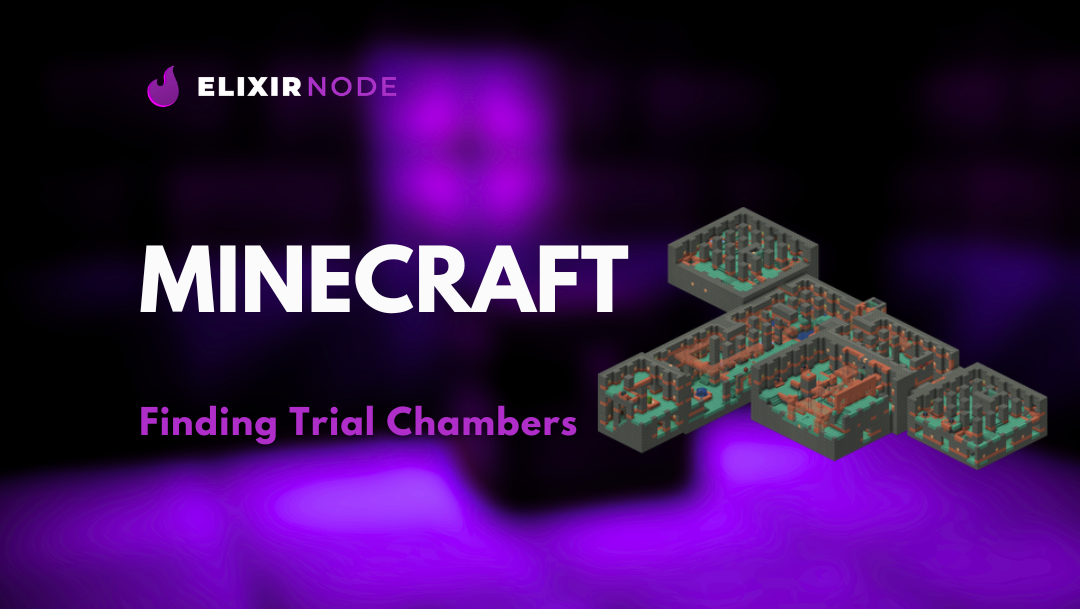
Trial Chambers are one of the most interesting underground structures in Minecraft right now. They are not random caves or simple dungeons. They are structured combat zones hidden deep underground, filled with rooms, traps, mobs, and reward systems. Most players walk right past them without even realizing they are nearby.
Trial Chambers are one of the most interesting underground structures in Minecraft right now. They are not random caves or simple dungeons. They are structured combat zones hidden deep underground, filled with rooms, traps, mobs, and reward systems.
Most players walk right past them without even realizing they are nearby. Others spend hours mining and still miss them completely.
The truth is simple. You do not “stumble” into Trial Chambers easily. You learn how they generate, where to look, and what signs to watch for.
This guide explains everything in a clear, beginner-friendly way so finding one actually makes sense instead of feeling random.
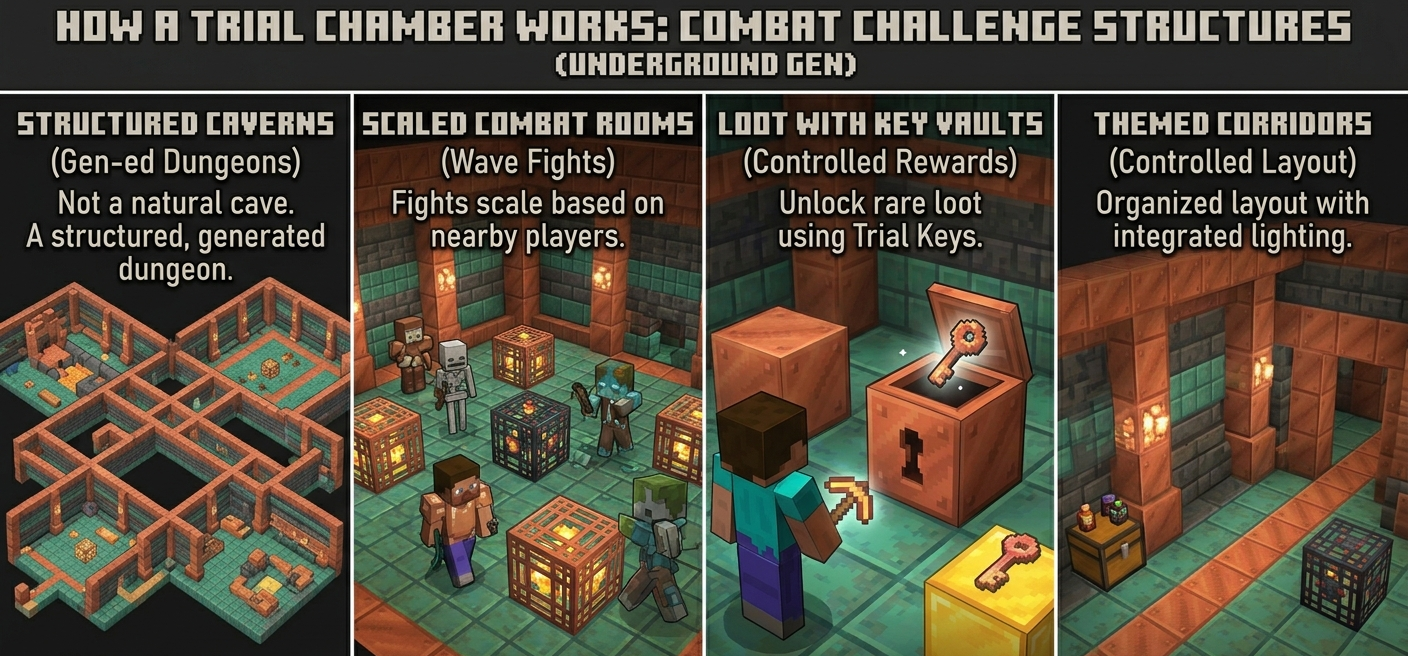
Trial Chambers are underground structures built for combat challenges. They are designed around fighting waves of mobs using trial spawners.
Inside, you will find:
Everything is built in a controlled layout. It feels like a dungeon, but more organized and more focused on repeated combat encounters.
The important thing to understand is this.
Trial Chambers are not natural caves. They are fully generated structures placed inside the underground world.
Trial Chambers generate deep underground in the Overworld.
They are not tied to villages, biomes, or surface landmarks. You can find them under plains, deserts, forests, or mountains.
What actually matters is depth.
They usually appear in:
You will never see them from the surface. Even standing directly above one, there is no visual clue.
That is why most players miss them.
Minecraft places Trial Chambers during world generation. When new chunks are created, the game decides whether to insert a structure underground in that region.
This means:
Each world contains multiple chambers spread across different underground areas.
So finding one is not about luck in the moment. It is about knowing where Minecraft is likely to place them.
Trial Chambers are mostly found in deep underground layers.
You should focus on:
They are not shallow structures. If you are mining near surface stone or mid-level caves, you are too high.
The deeper you go, the more likely you are to intersect or approach a chamber.
Still, there is no single fixed Y-level because world generation varies slightly.
There are two reliable survival methods.
This is the most natural approach.
Large cave systems often connect near or around Trial Chambers. As you explore, look for unnatural structures.
Signs include:
The moment you see symmetry underground, stop and investigate.
Some players find chambers accidentally while mining tunnels at the deepslate level.
While rare, it happens.
You might suddenly break into:
This is usually how surprise discoveries happen.
If cheats are enabled, Minecraft gives a direct locator command.
/locate structure minecraft:trial_chambers/locate structure trial_chambersThis will return coordinates for the nearest Trial Chamber. You can then travel there manually or teleport if allowed.
This is the fastest method available.
Trial Chambers are combat-focused, so preparation matters.
You should bring:
Optional but useful:
Inside, fights happen in waves. You will not always get time to heal or regroup, so preparation is important.
Trial Chambers are more than just loot rooms.
They offer:
Instead of just breaking chests and leaving, you actually earn rewards through fights.
That makes the experience feel more meaningful compared to normal dungeon looting.
Finding Trial Chambers is not random once you understand how Minecraft places them.
You explore deep enough, look for unnatural underground structures, or use commands when available.
The key idea is simple.
Do not search blindly.
Search smart.
Once you find your first Trial Chamber, you start noticing how many hidden systems exist under the Minecraft world that most players never even see.
FREE game server, VPS, web host, dedicated IP & more on most plans!
Get Started